Your Ad Here
Showing posts with label iPhone 3GS. Show all posts

Monday, 25 October 2010

Researchers hack toys, attack iPhones at ToorCon


This IM-Me instant messaging toy for teen girls can be turned into a wireless tool for opening garage doors, cloning RFID tags and other less innocent activities.

This IM-Me instant messaging toy for teen girls can be turned into a wireless tool for opening garage doors, cloning RFID tags and other less innocent activities.
(Credit: Elinor Mills/CNET)
SAN DIEGO--From "weaponized" iPhone software to hacked toys and leaked cookies, researchers at the ToorCon security conference here this weekend showed how easy it can be to poke holes in software and hardware with the right tools, know-how, and curiosity.
One researcher demonstrated how to take control of an iPhone using an exploit that targets a hole in Safari, which has been patched. The iPhone had an app installed that allowed it to process credit card numbers, which could then be stolen if this were an attack in the wild.
Eric Monti, a senior security researcher at Trustwave, "weaponized" an exploit that was launched as the Jailbreakme.com program this summer, designed to allow iPhone owners to use unauthorized apps.
For the demo, he directed the "victim" iPhone to a Web address that opened a PDF file that contained the exploit code. Then a rootkit was downloaded giving him complete control of the iPhone. Once a rootkit is downloaded an attacker has access to all data, e-mails, voicemails, and text messages, as well as the microphone and speaker. "You can easily eavesdrop on someone if you're on their iPhone remotely," Monti said.
If the iPhone has the free Square app installed, which is used for processing credit card numbers, the attacker could also steal those numbers, he said, adding that there is not a security issue with the Square app. "We will see people processing credit cards in stores using iPhone apps," transactions using highly sensitive data that should be on only secured devices, Monti told CNET in an interview after his talk.
Two researchers gave a light-hearted talk, titled "Real Men Carry Pink Pagers," about how they turned a toy into a wireless tool that could be used to open garage doors and clone RFID tags used for inventory control on shipping docks and RFID-based passports, among other uses. The pink plastic IM-Me device, with a "Girl Tech" brand on it, was designed to allow young girls to send instant messages with friends on a private network.
The IM-Me device also uses the same wireless chip that some smart meters use and could be turned into a diagnostic tool to test the security of those devices, said wireless researcher Michael Ossman. He worked on the project with Travis Goodspeed, who wrote software that gives the IM-Me functionality that most teen girls can't fathom.
"We took old hardware and repurposed it...It's fun to turn it into something useful and to learn about it," Ossman said, summing up a core element of the true hacker spirit.
This isn't the first toy Ossman has worked his hack magic on. During Defcon in August, he used the hackable badge from the event to try to turn a toy guitar into an electric instrument. The guitar, which he played for a select audience this weekend, remains acoustic at this point, but Ossman did manage to create a very cool electronic light oscillator for tuning the strings using RGB (red, green, and blue) LEDs.
Two other presenters showed how limited encryption used on many popular sites on the Web--like Facebook, Twitter, Hotmail, and Flickr (but not Google)--can put user accounts at risk of compromise by someone snooping on session traffic between the user's computer and the site's server. Sites typically encrypt the username and password as they are transmitted, but unless the entire Web session is encrypted with "https," or secure hypertext transfer protocol, someone sniffing the network could capture the cookie information and use that to access the accounts, according to security researchers Eric Butler and Ian Gallagher.
Web surfers don't even have to be on one of the sites to have their cookie data exposed. Any site that even just hosts a Facebook or Twitter widget or has a Flickr image embedded can leak a user's cookie data if the user is logged into the relevant host site, they said. "The cookie allows you to do everything you can with a password," Butler said. "It is hard for users to protect themselves."
So-called HTTP session hijacking, or "sidejacking," is not new; another researcher released a tool last year to enable this on Facebook. But Butler and Gallagher said users will be vulnerable to such attacks until Web sites move to full session, end-to-end encryption and configure sites to indicate that browsers only should send data over encrypted channels. They are releasing a tool that automates an attack and said that they hope that doing so will bring attention to the problem and motivate Web site owners to use encryption more broadly.
"Any motivated attacker could do this without this tool," Butler said. "We think this will shine light on the issue."

Eric Monti demonstrates how he is able to surreptitiously take control of an iPhone during a ToorCon presentation.
(Credit: Elinor Mills/CNET)
Another researcher talked about the security problems with the Absolute Manage (formerly LANrev) software, which was designed to remotely update software and which was used to secretly take photos of high school students in Philadelphia earlier this year. Joel Voss, security consultant at Leviathan, said it took him only 48 hours to develop a proof of concept and another dozen hours to create a working exploit to break the encryption on the software.
Voss' exploit renders all computers with the Absolute Manage client software installed vulnerable to compromise by an attacker who could not only spy on the computers, but even run malware on them. Voss informed the company about the problem in July but the current release of the software does not resolve the issue, he said. "It's bad for anyone to be running software that is that insecure," he said, adding that he is not releasing the exploit. Absolute Manage could not be reached for comment on Sunday.
Developers need to be aware of the privacy implications of the software they create, said David Kane-Parry, a principal security consultant at Leviathan Security Group. His talk focused on potential unintended privacy issues related to location-based mobile apps, like Google Maps, in which the data is not encrypted between the consumer's device and the app server. He also noted, for example, that mobile photos uploaded to sites like Facebook can be geo-tagged to reveal the coordinates of where the photo was taken, unbeknownst to the picture taker.
And in a keynote at the event, Dan Kaminsky, who discovered a security flaw with authentication in the Internet's Domain Name System last year and an even more serious problem the year before, talked about the need for the industry to adopt DNSSEC, which stands for Domain Name System Security Extensions. DNSSEC deployment has been slow because it's not easy to do, he said.
To solve that problem Kaminsky has developed software he jokingly dubbed "Phreebird" that allows DNSSEC to be deployed as an upgrade to the existing infrastructure without having to "massively change their processes," he said. A test version of the software will be released at Black Hat Abu Dhabi in November. Meanwhile, a member of the Google Chrome team has developed an "unofficial, unsanctioned" build of Chrome that uses DNSSEC to validate Web sites, he said.
"There's a huge bug in one of the core concepts of the Internet," Kaminsky said in an interview. "DNSSEC is a fix, but we need to deploy it."

Thursday, 21 October 2010

Best Cell Phones 2010

We get a head start on 2010 and take our picks for the best cell phones so far this year.
It’s a new year with new things to look forward to—new haircuts, new styles and even some new cell phones. The top cell phones for 2010 are actually not as new as one would have thought. Although many Verizon customers are loving their new Android-powered Droid smartphone from Motorola, the cell phone kingdom is still dominated by Apple’s iPhone. This may change in time—especially at the rate handset manufacturers are pumping out smartphones with Android operating systems—but it also could grow, like if other carriers were allowed to pick up the iPhone. Rumors that AT&T will be losing iPhone exclusivity have been circulating for months; and while this is just mobile gossip, we do wonder how many Droid holders would drop their cyborg-handset to pick up Apple’s sleek smartphone.
The year is still young, so we’re not going to give into any uncertainties just yet.  It looks like there are a couple of exciting new mobile devices to appear this year, as well as some cameos from our former favorites. Check out our picks for the top 2010 cells phones—so far.

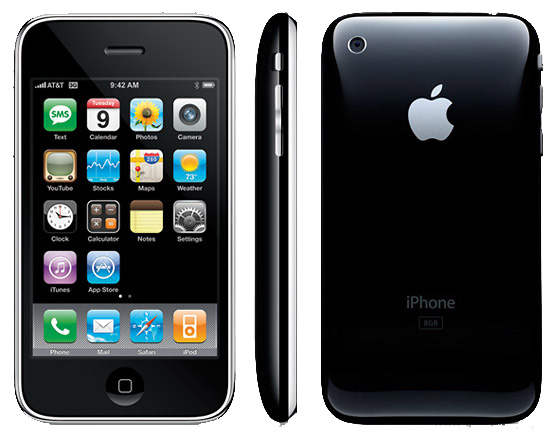
iPhone 3GS

iphone-3gs-3Apple’s iPhone still reigns supreme when it comes to the cell phone kingdom—setting a standard for the rest of the cellular community. The iPhone is still the company’s main breadwinner, selling 8.7 million of the elite Apple phones just this past quarter. The latest version, the iPhone 3GS, comes in a 16GB model and 32GB model, and is available in both black and white.  The iPhone 3GS sports multimedia messaging, video recording, voice dialing, up to 5 hours of 3G talk time or 12 hours on 2G, built-in digital compass, and the same awesome multimedia functions.
The iPhone 3GS also features the iPhone OS 3.0 mobile operating system, making the phone’s multitasking abilities possible. The only thing that we don’t love about the iPhone 3GS is its 3 megapixel camera that snaps fuzzy photos and videos—Apple also knows that’s one place this high-powered smartphone could improve, so we have our fingers crossed for an update this June.
The iPhone 3GS is available for $199 (16GB model) or $299 (32GB model) with two-year AT&T contract.

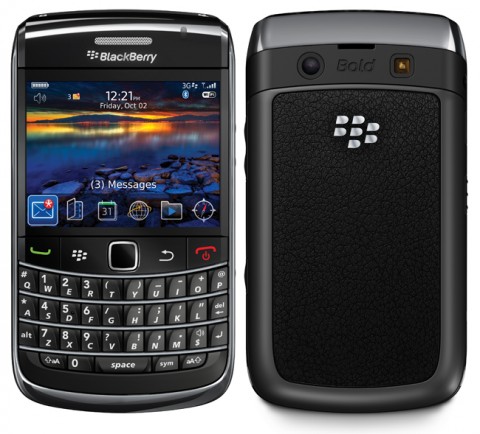
Blackberry Bold 9700

BlackBerry-Bold-9700RIM’s BlackBerry smartphones have always been practical, but recently the Canadian company has been producing some stylish handsets.  This business-chic handset boats a high resolution 480×360 pixel color display, Integrated GPS with A-GPS, 35 key backlit QWERTY keyboard, 35 key backlit QWERTY keyboard, Wi-Fi, 3G, 3.2 megapixel camera, video recording and a touch-sensitive trackpad. The Bold 9700 comes with BlackBerry OS 5.0, enabling full HTML Web browsing, calendar and contact management, and integration with corporate email systems like Microsoft Exchange.
If you don’t need any of the frills of other phones the iPhone or Palm Pre, then the utilitarian handset may be the smartphone for you. And if you’re feeling fun and frivolous, the Bold 9700 can also tap into RIM’s BlackBerry App World and uses BlackBerry Media Sync to link up with iTunes or Windows Media Player—also the BlackBerry Bold 9700 can play up to 38 hours of music on a single battery charge.
The BlackBerry Bold 9700 is available from AT&T for $199 and T-Mobile for $129.99 with a contract and online discount.

Motorola Droid

motorola-droid
Verizon and Motorola should be very proud of their Droid smartphone—with each new Google Android-powered phone exceeding the next, the Motorola Droid is definitely at a superior status within its OS community. The Motorola Droid was the first truly considerable iPhone-killer, and once industry pros got their hands on it they realized why—it was fast due to Verizon’s superior EV-DO Rev A network, a solidly built smartphone, and quite a handsome handset.
The Droid was a momentous moment for both Verizon and Motorola—it was Verizon’s first Google Android phone and it reinstalled the mobile community’s faith in Motorola as a handset manufacturer. The Droid sports a gorgeous 400,000-pixel 16×9 3.7-inch LCD touchscreen, the speedy Android 2.0 operating system, slide-out QWERTY keyboard, Voice-prompted Google Maps Navigation, Bluetooth v2.1+EDR, a 5 megapixel camera, 480p HD camcorder, and a 1400 mAh battery that provides up to 6.4 hours of talk time.
The Motorola Droid is currently available exclusively from Verizon Wireless for $299.99 including a two year contract; or the Droid is also available from Motorola for $599.99.

HTC Nexus One by Google

google-nexus-one-flatThe Nexus One has been overshadowed by the madness of Apple’s iPad rumors and announcements, and we think Google first phone merits a little more positive attention than it’s been receiving. Always a formidable competitor, Google took on the task of creating their own smartphone to duke it out in the mobile market with Apple, RIM and the best of them. With a little help from HTC—Nexus One handset manufacturer—Google put out quite the high-quality cell phone.
The Nexus One sports a speedy 1 GHz Snapdragon processor from Qualcomm, a large 3.7-inch and 800 by 480-pixel AMOLED display, a 5 megapixel video-capable camera with an LED flash, 512 MB of flash storage, and built-in GPS and mapping navigation. The new Google phone also ship with Android 2.1 making it super speedy—as well as offering full support for services like Gmail  and ties in with social networking services like Facebook and Twitter.
The Google Store is offering the Nexus One for $529 without service, or $179 with a new two-year contract from T-Mobile. This spring Verizon and Vodaphone should also be offering the Nexus One.

Motorola Backflip

motorolabackflipIf you lusted after the Motorola CLIQ while trapped in an AT&T service plan, 2010 is your lucky year. The backwards, back-flipping CLIQ-like smartphone—the Motorola Backflip—will be arriving at AT&T this year. The Motorola Backflip is a multitasking Android smartphone that features MOTOBLUR and a unique reverse-flip design. Motorola says this new phone’s design makes it easier to enjoy videos, music and photos. The Backflips’ QWERTY keyboard helps you to blast through e-mails, texts, news feeds and social network messages. This device supports Bluetooth A2DP, a high-res 3.1” HVGA screen, 3G Internet, Wi-Fi access and a 5 megapixel camera.
The Motorola Backflip is not out yet and the details of its release date are scarce. The new Android-powered smartphone will be one of the few handsets arriving at AT&T this year—we think between that and its promise as a genuinely good phone; it’s enough to celebrate it.
CNET sites the Backflip as coming to AT&T on March 7, but nothing has been confirmed. The phone will launch in Q1 of this year. So if you’re looking for a spiffy and speedy Android smartphone with a solid build, Motorola may just have one for you.

Palm Pre Plus

palm-pre-plusThe Palm Pre Plus is the revamped version of Palm’s Pre smartphone. Most people who have gotten a chance to handle this device—like when it was displayed at CES this year—have said it’s much sturdier and a lot easier to use. Aside from the memory gain, a couple quick hardware tweaks and debuting on Verizon’s super fast network, there isn’t as much of a significant difference between the Pre and the Pre Plus.
The Pre Plus now sports 16GB of memory, 512MB of RAM, and the new the WebOS SDK making WebOS apps a little more versatile and plentiful. The slide-out QWERTY keyboard which Palm claims has been enhanced for a better user experience is great for those avid texters, and this compact smartphone boasts Palm’s newest WebOS platform making it extra speedy.
The Palm Pre Plus is available from Verizon Wireless for $150 with a two year contract and after rebate.

Sony Ericsson Vivaz

vivaz1Sony Ericsson’s Vivaz smartphone is quite the pack: it runs Symbian S60 5th Edition operating system powered by a 720MHz processor and has PowerVR SGX graphics acceleration. The Vivaz also comes with AGPS, TV-out at VGA resolution, a 3.2-inch WVGA, FM radio, 2.0 Bluetooth and Wi-Fi. The Vivaz is quad band GSM with 3G support provided via HSDPA/HSUPA (10Mbps / 2 Mbps). The slender smartphone is 107 x 51.7 x 12.5mm and weighs a mere 97g. To add to the already long list of specs, the Vivaz also comes with excellent email functionality, supporting IMAP, POP3 and SMTP protocols and Microsoft Exchange, and includes support MMS, EMS, and for SMS messages which are displayed in threaded view.
The shining star among the rest of the high-end features powering the Vivaz is its HD video recording capability. The 8.1megapixel camera not only has LED flash, image stabilization and face detection, it also allows you to capture clips with a 720p resolution that you can directly upload to YouTube and Picasa.
The Vivaz has not been released yet but the company says it will launch within this quarter in both American and global markets. Were telling you about this little gem of a smartphone because we’re pretty keen on it and its HD video capabilities and we think it’s one of 2010 best phones so far.